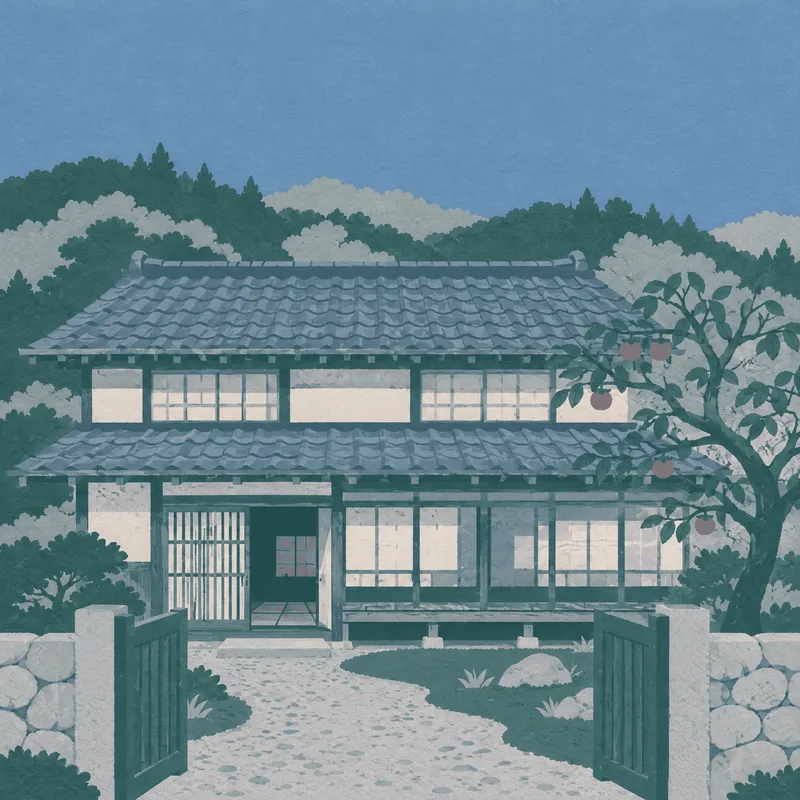
The house costs ¥1,000,000. Closing costs ¥566,500. Here is every step and every yen.
The Akiya Buyer's Handbook shows you how to buy a house from a Japanese town's akiya bank when you live abroad: the 12 steps, the emails in Japanese, the taxes with their rates, and three real houses with the costs filled in.
The Akiya Buyer's Handbook
Free with the 12-month pass ($59). Get the pass and the handbook
Secure checkout by Stripe. Download link by email in under a minute. We are not a broker. General information, not advice.
Figures checked in November 2026 against the National Tax Agency, the Ministry of Finance, the Ministry of Land, Infrastructure, Transport and Tourism, the Ministry of Justice and town pages. Every chapter lists its sources.
What's inside
- Is an akiya right for you? The four costs after the price, and a 10-question test.
- How akiya banks work. Registration, keyholders, viewings, direct sales and agent sales, and what a town wants from a buyer.
- Step by step from abroad. Twelve steps from first email to keys. The judicial scrivener, the contract clause by clause, paying by wire, registration, and the 20-day report that became compulsory for homes on 1 April 2026.
- Japanese emails and a phone script. Eight emails in polite business Japanese with English beside each line: first inquiry, viewing request, questions about the house, offer, stand-in viewing, follow-up, scrivener quote, withdrawing.
- The total-cost worksheet. Stamp tax, registration tax, acquisition tax and fixed asset tax with 2026 rates, agent and scrivener fees, renovation bands, yearly running costs, and a blank sheet for your house.
- The viewing checklist. 68 points: frame, roof, termites, water, drains, power, the road rule, boundaries, hazards.
- Red flags and how to check them. Twelve flags, the national hazard map in eight steps, and how to read a registry record.
- Visas and owning. Nine statuses compared, with sources. What a non-resident owner cannot do.
- Renovation and subsidies. The order of work, permits since April 2025, and three town grants with their catches.
- Living there. Internet, cars, snow, hospitals, neighbours and the neighbourhood association.
- Three worked examples. A ¥5,500,000 station house in Chiba, a ¥3,500,000 farmhouse in Hiroshima and a ¥1,000,000 house in Yamagata, each with closing costs, first works and yearly costs.
- Glossary. 95 terms in Japanese and English.
- Closing costs
- 56.6%of the price, on the ¥1,000,000 house
- Noto 2024
- 19.4%of wooden buildings from before June 1981 collapsed in the worst-hit parts. For buildings from June 2000 on it was 0.7%.
- Agent fee cap
- ¥330,000the most an agent may charge on a house at ¥8,000,000 or less
Who it's for
- You live in the US, the UK or Europe and you want a house in the Japanese countryside.
- You have read that foreigners can buy and that a house gives no visa. Now you want to know how to do it.
- You will pay cash, somewhere between $10,000 and $80,000 all in.
- You do not read Japanese, or not well enough to write to a town office.
Who it's not for
- You want a Tokyo apartment or a rental investment. This book is about town akiya banks.
- You want someone to buy the house for you. We are not a broker. The book tells you which licensed professional does each step.
Read 6 pages first.
The sample has the introduction, the contents, the first five steps from chapter 3 and the first-inquiry email in Japanese and English.
We email a link to confirm. After that you get the Friday list: 10 new houses every Friday, first issue 4 Dec. One click stops it.
The 12-month pass includes the handbook.
$59 once, for 12 months: every house on every bank we track, alerts for new houses and price drops, saved searches, and the $14.99 handbook in your account library.
Get the 12-month pass: $59After you finish the book
- Video tour of one house: $1,500, with a $300 deposit that comes off the price. Filming only, not an inspection.
- Watch a house for free.
Questions people ask
What format is it?
A PDF, 6 by 9 inches, 65 pages. It reads well on a tablet and prints on A4 or US Letter. The contents page links to each chapter.
Is it up to date?
It was checked in November 2026. It covers the April 2026 change to the purchase report for buyers living abroad, the nationality item added to registration on 5 October 2026, and tax rates as extended in the fiscal 2026 reform. Japan changes rates and forms every April. When we update the book, the new edition appears in your account library at no charge for 12 months.
Are the Japanese emails correct?
They are Japanese templates written for town offices. Have a Japanese speaker read yours before you send if you can. You fill in the brackets: your name, the listing number, your dates.
Can I buy a house with only this book?
You can run the whole process with it. You will still hire a judicial scrivener for the registration, and on many houses a licensed agent handles the contract. The book tells you when, what they cost and how to ask for a quote in Japanese.
Do you help with the purchase?
No. We are not a broker. We list houses, publish guides and film houses. We do not negotiate, hold money or handle contracts, and we earn nothing when a house sells.
Is this legal or tax advice?
No. It is general information with sources. Before you sign or send money, check with a licensed professional in Japan. The book names which kind for each step.
I have the 12-month pass. Do I need to buy it?
No. It is in your account library.
Can I get a refund?
No. The handbook is a digital download and the link goes out the moment you pay, so all sales are final. Read the free 6-page sample first to see if it fits. If the download fails, write to support@akiyawatch.com and we send a new link.
Does it cover apartments, Tokyo or loans?
No. It covers detached houses on town akiya banks, bought with cash.
We are not a broker. The Akiya Buyer's Handbook is general information and does not advise on any specific house or deal.