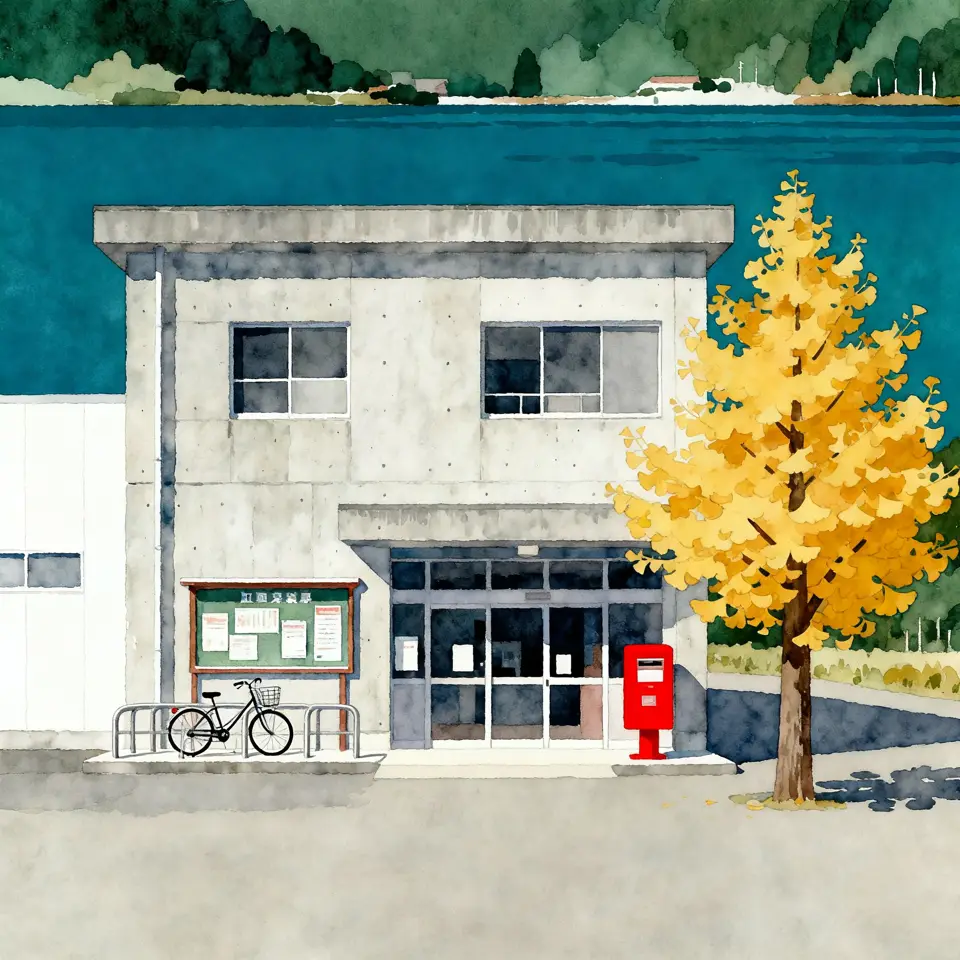
Japan counted 9.0 million vacant homes in its 2023 Housing and Land Survey, 13.8 percent of all housing. About 3.85 million of them are the kind nobody lists for sale or rent. The towns started banks to get some of those houses lived in again.
Get the next one first. Towns post houses without warning. We check the banks every night and message you the morning a house appears, drops its price or leaves the bank.
Get the 12-month pass: $59One payment. No subscription. It ends after 12 months unless you buy again.
Why Japan has so many empty houses
The population peaked in 2008 and has fallen since, while builders kept putting up new houses. Young people left villages for cities, and their parents' houses passed to heirs who live elsewhere. Two rules keep the houses standing. The land under a house pays a fraction of the normal tax, so tearing the house down raises the bill. And demolition costs the owner money, often more than the land sells for. Owners wait, and the roof gives out.
What the town does
The town collects houses from owners who answer a survey or walk into the office, takes photos, writes a listing and publishes it on a page of the town's website. Some towns hand the listing to a local real estate association, which then handles contracts. Our 3,826 houses come from 33 banks like this, read each night. We read the public town pages and link back to each one.
How you use one
- Look through the listings. The details are short: price, address, layout, year, land, a few photos.
- Register as a user (利用登録). Most towns ask for a name, contact details and a reason for wanting a house. Some ask whether you will live there. A foreign applicant is fine, and the form is in Japanese.
- Apply for a viewing. The town sends the owner's contact or an agent's. A keyholder (a neighbour or the town office) opens the door.
- Negotiate. With the owner directly, or with the agent. The town is not a party to the sale.
- Check for subsidies. Many towns pay part of a renovation, a move-in, or clearing out the belongings. Ask for the list before you sign, because most subsidies cannot be claimed after.
What you should expect
Listings go stale. A house shown as open may be sold, and some banks update monthly. Photos are phone pictures taken by a town clerk and do not show the roof. Prices are asking prices and many have no price at all (要相談). We record the night a house first appears and the night it leaves, so you can see how long it has been on the list.
There is also a national bank run for MLIT by two private companies since 2018, which joins many town banks in one search. We do not use it.
Cannot fly over to see it? A local person films the house for you. $1,500 flat, with a $300 deposit. Pick a house, then ask for the tour on its page.
Find a houseConditions you may meet
- You must live in the house, or register your residence in the town.
- You must renovate within a set number of years.
- You must join the neighbourhood association (町内会).
- A "free house" (¥0) still has costs: transfer fees, taxes, clearing the house, and the roof.
This guide explains how banks usually work. Rules differ by town. Check with a licensed professional where the law matters.
Questions people ask
What is an akiya bank?
A list of empty houses kept by a town or prefecture. The owner agrees to sell or rent, and the town introduces buyers.
How many empty houses does Japan have?
9.0 million in the 2023 Housing and Land Survey, 13.8 percent of all housing.
Can foreigners use an akiya bank?
Yes. Towns publish the listings for anyone. Some towns add conditions about living there.
Is Japan giving away free houses?
Some towns list houses at ¥0 or for a token price, because the owner wants to stop paying tax on it. You still pay transfer fees, taxes and the cost of making the house livable, and some towns attach conditions.
Are akiya bank houses really free?
A few are listed at ¥0. You still pay transfer costs, taxes and the cost of making the house livable.
Sources
More guides
- How to buy an akiya in Japan as a foreigner
- Can foreigners buy property in Japan?
- What an akiya costs on top of the price
- Hazards, and how to read the official map
- Renovating an akiya
- Red flags: what to look for before you pay
- Buying from abroad, step by step
- Living there: internet, cars, snow, hospitals
- Glossary: akiya terms in plain English